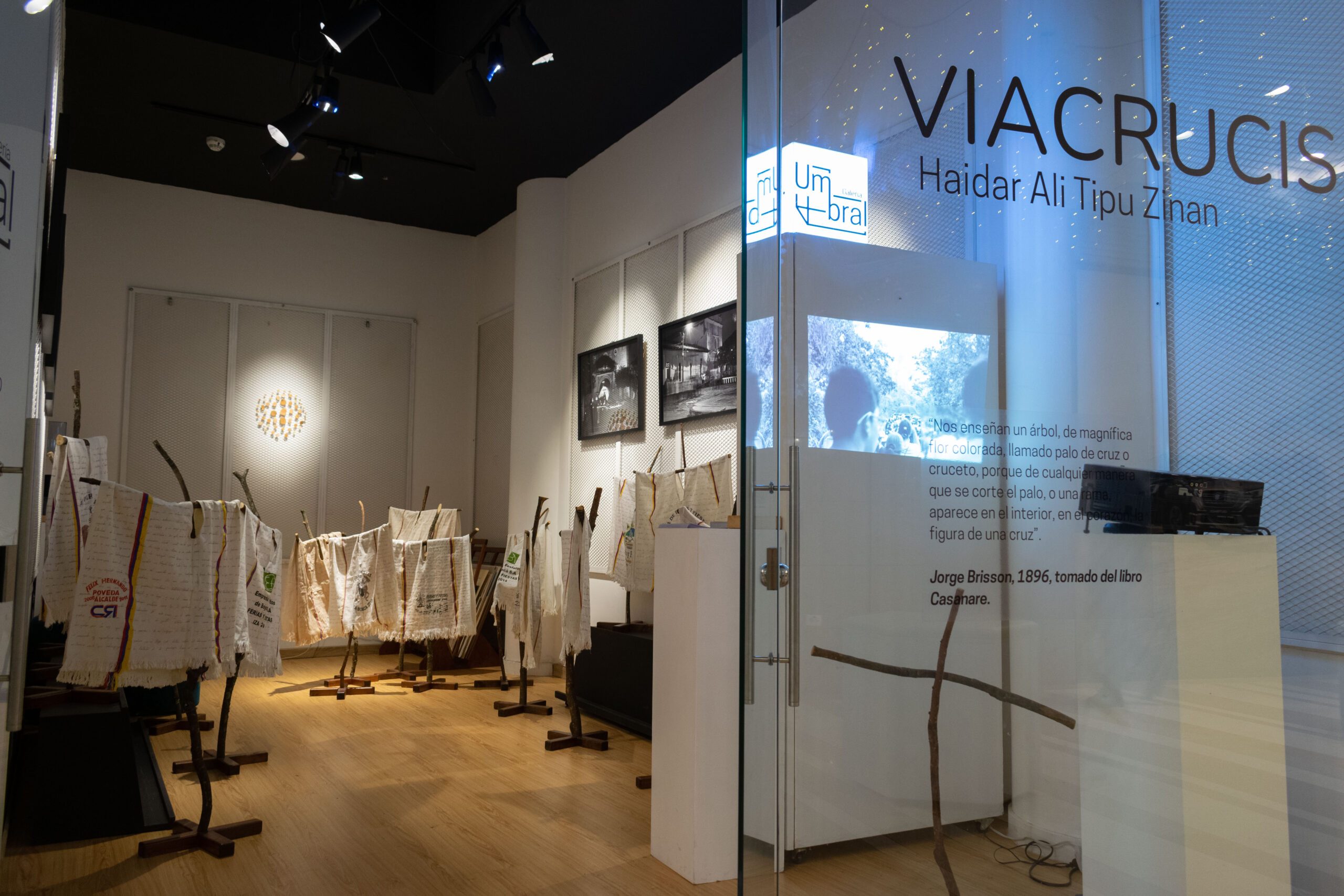
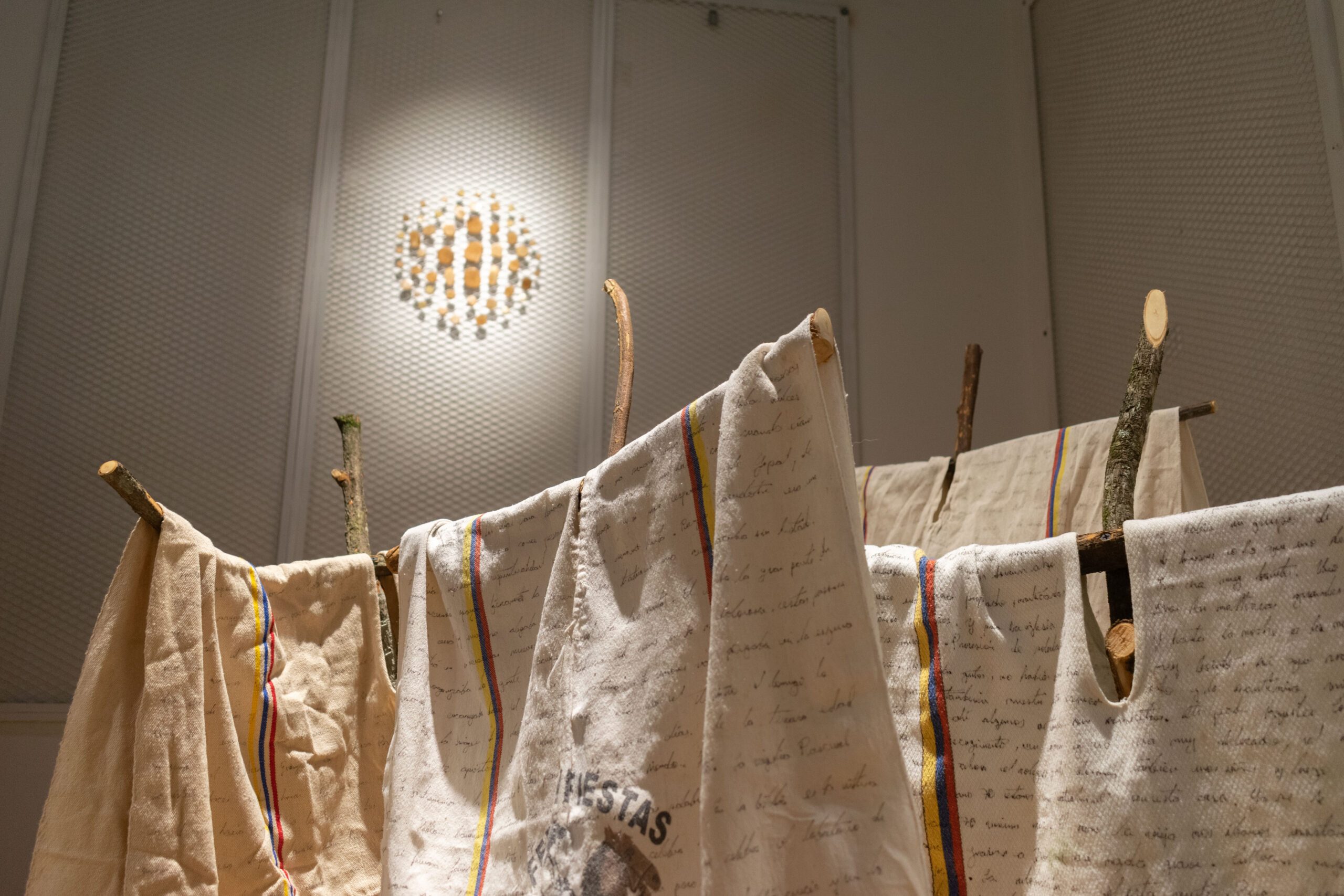
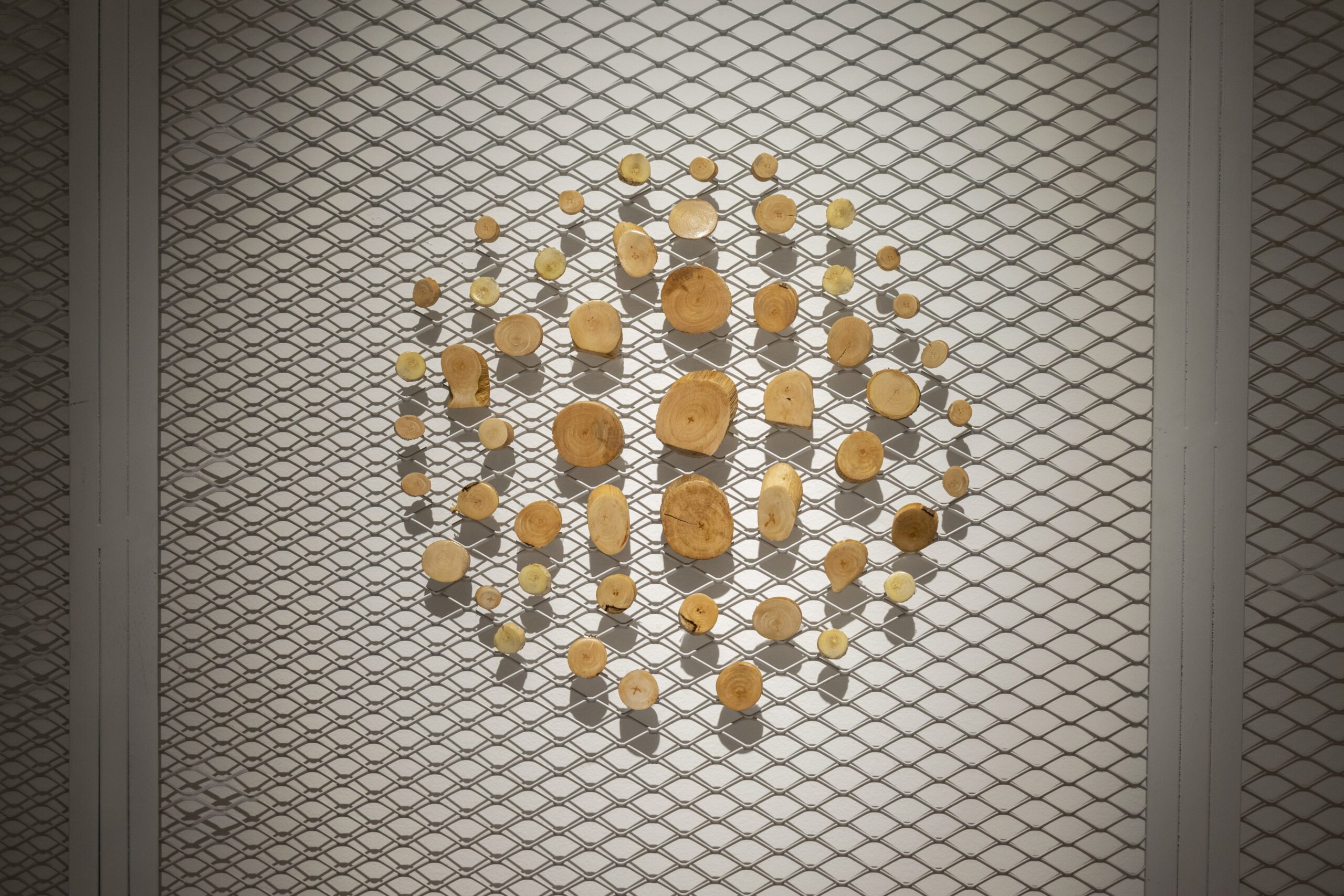
Intervened wood, written ponchos, digital photography, and video
Dimensions
Variables
Year
2023-2025
Technique
Photography
Dimensions
60 x 90 cm each
Year
2023-2024
Project
This is a singular Way of the Cross. Every Good Friday in Labranzagrande, Boyacá, the fourteen stations of the procession unfold along paths that lead toward the most remote rural settlements of the municipality. As the liturgy gradually moved toward the edges of the town, the meaning of the ritual shifted: the route changed, the landscape entered the ceremony, and the physical strain of certain devotees—who carry on their shoulders a nearly two-meter-long solid wooden cross—became an essential part of the act of devotion.
From this liturgical gesture, understood as a literal walking of the cross, Haidar Ali develops a research project centered on the cross as both a symbolic and material object. What emerges are records of the processions: bodies in motion traversing long distances, praying and inwardly reliving the passion and death of Christ. In the early hours of the following day, the Holy Hour takes place—a vigil held in the presence of Jesus’ absence and death. In the dim candlelight and shadows of the church, this nearly mystical moment gives rise to ghostly images that, together with the procession videos, form the point of departure for the investigation.
Immersed in historical archives and through a chance discovery, Haidar encounters the account of the French engineer Jorge Brisson, which leads him to the palo de cruz, or crucetoBrownea ariza(Brownea ariza), a tree native to South America whose wood, no matter how it is cut, reveals “at its core the shape of a cross.”
This tree—also believed to have the power to stop bleeding—provides the wood that the artist transforms into crosses and wearable forms. At their tips, faint red crosses appear, marks from the heart of the trunk, as if the fibers themselves were calling forth the sacrifice of Christ.
From these crosses hang ponchos, a garment characteristic of the people of Labranzagrande and traditionally exchanged during the town’s festivals and fairs. Here they become surfaces for writing: the artist inscribes on them, almost illegibly, memories and testimonies gathered from the faithful around the Way of the Cross. Suspended on the crosses, the ponchos take on the weight of absent bodies and the status of an opaque archive, bearing within them a collective memory and the liturgical traditions of an entire territory.